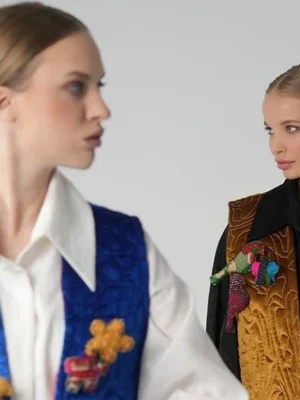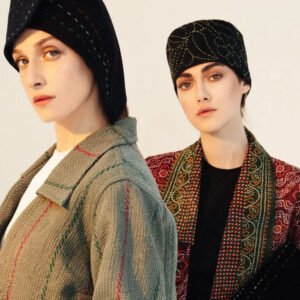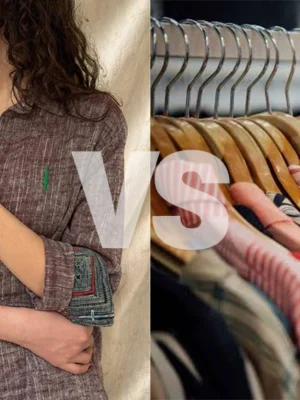
Contemporary Iranian fashion is the clothing design and personal style being developed by Iranian designers and wearers today, both in Iran and abroad. It includes everyday dressing, independent labels and experimental collections. There is no single look that defines it. What connects much of this work is an interest in how Iranian culture, craft and lived experience can take shape in clothes made for the present.
That connection can be easy to recognise: a floral motif, a length of handwoven cloth, a line of Persian calligraphy. Sometimes it is quieter, expressed through colour, proportion or the way a garment moves. And some Iranian designers work with few visible heritage references at all.
This article explains the term and the ideas behind it. For a wider look at the designers, collections and cultural context, explore our guide to contemporary Iranian fashion.
How Is It Different from Traditional Iranian Clothing?
Traditional Iranian clothing refers to dress associated with particular communities, regions and historical periods. It includes forms of clothing that are still worn and made today. These traditions have their own uses, techniques and meanings; they are more than a store of patterns for designers to borrow.
Contemporary fashion has a different purpose. A designer might study the proportions of a regional garment, then change its construction for a modern wardrobe. A textile usually used in one setting might become the starting point for a coat. A familiar floral pattern might influence the cut of a sleeve rather than appear as a print.
The distinction lies in what happens to the reference. Reproducing a historical ensemble preserves a particular form of dress. Reworking its fabric, shape or detailing creates something new. Both have value, and the boundary between them can be fluid.
A garment does not need traditional ornament to belong to contemporary Iranian fashion. Minimal tailoring and experimental silhouettes are part of the picture too. Iranian identity can inform a designer’s thinking without announcing itself on the surface of every piece.
How Did Contemporary Iranian Fashion Develop?
Iran’s modern fashion history began before the 1979 Revolution, so that date should not be treated as its starting point. The revolution did, however, reshape the conditions in which clothing was designed and worn. Changes to public dress requirements affected womenswear in particular, giving new importance to outer layers, coverage and the relationship between garments.
The manteau, a coat worn as an outer layer, became an important space for variation. Its length, cut, fabric and colour could change the character of an outfit. Scarves and accessories offered further possibilities for personal styling.
But public dress is only part of the story. Clothes for private occasions, studio collections and the work of Iranian designers abroad developed in different settings. Together, they make it difficult to describe Iranian fashion through one set of rules or one silhouette.
That variety matters. Fashion in Iran involves individual taste, practical needs, cultural expectations and political conditions. Reducing every choice to a statement of resistance, or every collection to an expression of tradition, misses much of what people actually make and wear.
What Gives Contemporary Iranian Fashion Its Character?
A Fresh Reading of Heritage
For designers who draw on Iranian heritage, the interesting question is how to translate it. Repeating a motif is one option. Studying its rhythm, scale or structure can lead somewhere less expected.
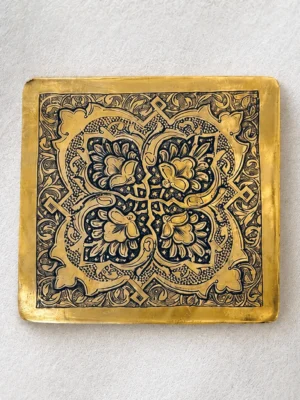
A floral form, for example, might suggest the edge of a garment or the shape of a panel. A colour relationship found in an old textile might work in an otherwise simple outfit. The reference remains, but its role changes.
Attention to Fabric and Making
Heritage can also be present in the material itself. Working with handwoven cloth means considering its texture, weight and irregularities as part of the design.
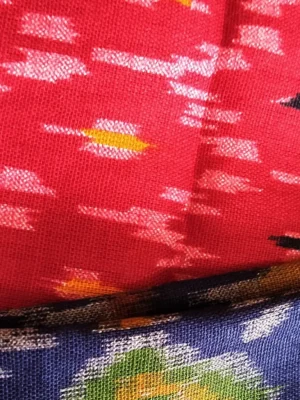
Daraayi, an Iranian form of ikat associated with Yazd, offers a clear example. Its yarns are resist-dyed before weaving, producing patterns with softly shifting edges. In a contemporary garment, those qualities influence how the fabric sits alongside other materials. Our article on daraayi, the Persian ikat, looks more closely at the textile and its place in Kiumarsi’s work.
Experimentation with Shape and Styling
Layering creates room to experiment with length, volume and movement. A long outer garment can feel structured or loose; a scarf can introduce contrast or continue the colour of the clothes beneath it.
Covered dressing is one strand of contemporary Iranian fashion. It does not describe every designer’s practice, and it is not interchangeable with Iranian fashion as a whole.
Different Ways of Expressing Identity
Designers working in Iran and those working abroad bring different experiences to their collections. For some, cultural references come from daily contact with places, crafts and clothing. For others, memory and distance may play a larger role. Neither experience produces a single, predictable aesthetic.
This openness is part of what makes the field interesting: the same cultural reference can lead to very different clothes.
Naghmeh Kiumarsi: Heritage in a Contemporary Wardrobe
Naghmeh Kiumarsi’s work offers one way to understand this approach. Her collections draw on Iranian art and textiles while exploring how those references can become wearable forms.
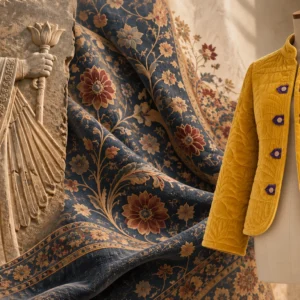
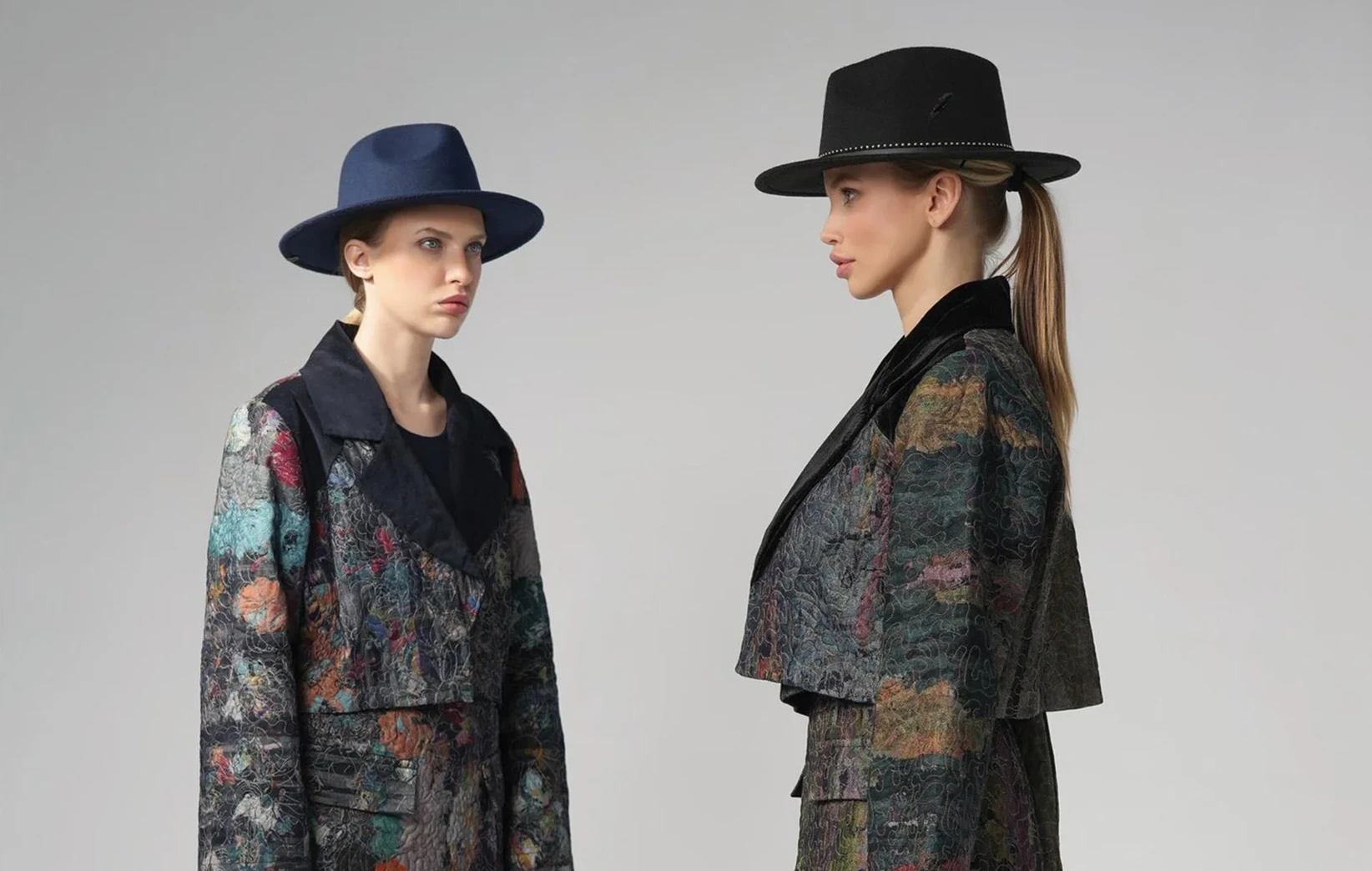
In her Shah Abbas garden collection, Safavid-inspired floral references inform the garments’ shapes and edges as well as their surfaces. Textile choices, including daraayi and termeh, give the cultural connection a material presence. The collection offers an example of how heritage can guide the construction of new clothing.
In her interview on Iranian culture and fashion design, Kiumarsi discusses the research behind this process and the importance of understanding a reference before using it. For her wider career and design background, visit About Naghmeh Kiumarsi.
A Definition That Leaves Room for Difference
Contemporary Iranian fashion describes a varied field of design and dress, shaped by the people making and wearing it now. Persian heritage is an important resource within that field, alongside regional traditions, personal experience and ideas shared across borders.
To understand a particular collection, it helps to look closely: which references has the designer chosen, what has changed, and how do those choices affect the finished garment? That is where broad ideas about culture become specific decisions about fabric, cut and detail.
Explore Naghmeh Kiumarsi’s collections to see how these decisions take shape in her work.