Iranian fashion is a broad term for the clothing, design and dress practices associated with Iran and its communities. It can describe what people wear today, the work of Iranian designers at home and abroad, or the historical garments and regional traditions that inform their work. There is no single silhouette, textile or set of colours that defines it.
A handwoven fabric from Yazd, a regional wedding outfit and a contemporary jacket made in Tehran each reveal a different part of the subject. Looking at them together helps explain why Iranian fashion extends well beyond the images of headscarves or ornate textiles through which it is sometimes introduced.
What Does the Term Include?
In everyday conversation, Iranian fashion usually means current clothing and style: independent labels, designers’ collections and the choices people make when getting dressed. Some of that design draws visibly on cultural heritage. Some follows a more minimal or experimental direction.
In a broader discussion, the term also includes dress history, regional clothing and textile craft. These subjects are closely connected, but they are not interchangeable. A historical court robe, a community’s ceremonial dress and a new ready-to-wear collection have different purposes and belong to different contexts.
That distinction is useful when looking at a garment. Are we discussing where it was made, who wears it, the tradition behind its fabric, or the designer’s interpretation of that tradition? Each question offers a different way into Iranian fashion.
Is Iranian Fashion the Same as Persian Fashion?
The two phrases often overlap, particularly in English-language writing about art, textiles and historical dress. “Persian fashion” may refer to Persian cultural references, clothing from historical Persia, or a designer’s use of that heritage.
“Iranian fashion” is the broader term when discussing Iran and its many communities. Kurdish, Qashqai, Turkmen, Baluch, Gilaki and other dress traditions belong within that picture, each with its own context.
There is no rigid naming rule that resolves every use of the two words. It helps to be specific: a reference to Safavid court dress means something different from a reference to contemporary Iranian womenswear.
A Brief Look at Its History
Historical clothing offers evidence of how people expressed status, belonging and taste. For some periods, that evidence comes from surviving garments; for others, paintings, written accounts and textile fragments provide much of what we know.
The Safavid period is especially well documented. The Metropolitan Museum of Art’s account of Safavid fashion describes richly coloured layers, patterned silks and fabrics woven with gold- and silver-wrapped threads. Literary scenes and other imagery could make the cloth itself a vehicle for expression.
Dress continued to change during the Qajar period, as local practices interacted with European materials and styles. Encyclopaedia Iranica’s study of Safavid and Qajar clothing shows how garments, images and written records help reconstruct those changes. Historical dress was never entirely static.
The twentieth century brought further shifts through state dress policies, urban life and changing access to clothing. After the 1979 Revolution, new requirements for public dress reshaped womenswear in particular. Those changes are part of Iran’s fashion history, but neither public dress rules nor court clothing can account for the whole of it.
Why Regional Clothing Matters
Regional dress makes the breadth of Iranian clothing traditions easier to see. Qashqai women’s dress, for example, is known for full skirts and colourful fabrics. Baluch women’s dress has distinctive embroidered panels. These are specific clothing traditions, with variations within them, rather than pieces of a uniform national costume.
Clothing can differ within a region according to occasion, age, family practice and personal preference. A photograph of ceremonial dress therefore should not be treated as a complete account of what everyone in that community wears.
For contemporary designers, regional clothing offers more than decorative inspiration. Its proportions, construction and use of fabric can suggest new ways to make garments.
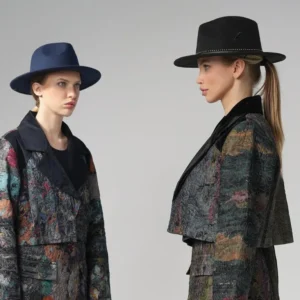
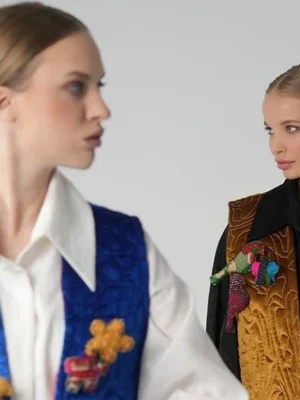
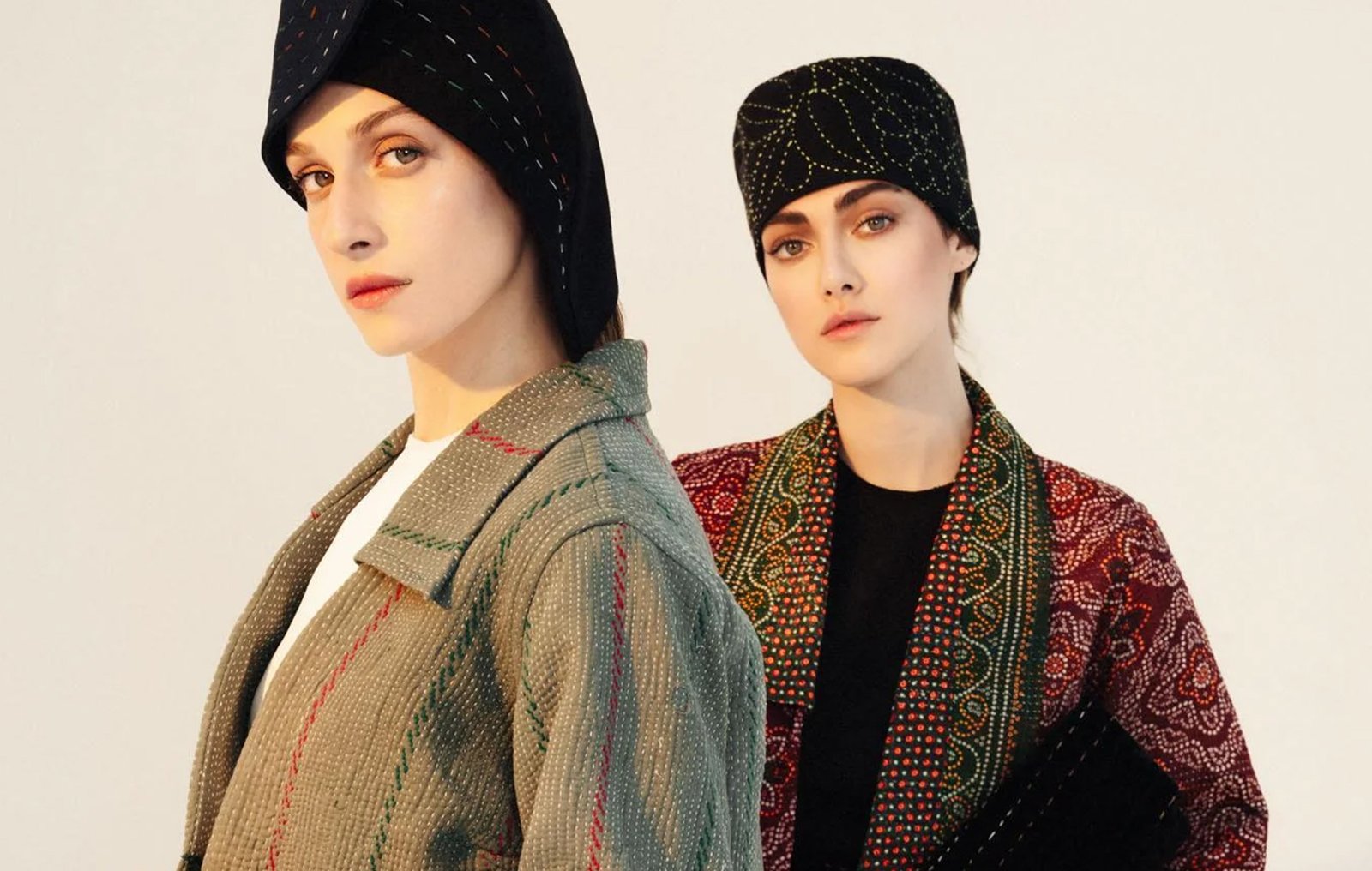
Naghmeh Kiumarsi’s collection inspired by twelve Iranian communities, presented in Cannes in 2025, offers one example. It reinterprets regional dress through handwoven fabrics, embroidery and contemporary design.
Textiles and Motifs: Two Different Parts of the Story
A textile is a material with its own structure and method of making. A motif is a design element that may appear on it. Keeping the distinction in mind helps us look beyond the surface of a garment.
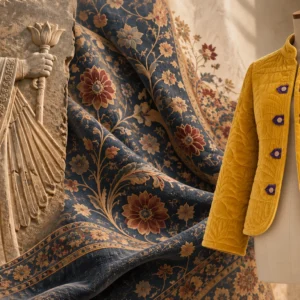
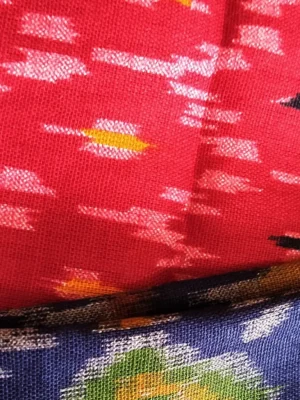
Termeh is a patterned woven textile strongly associated with Yazd, often recognised by its boteh, or paisley, designs. Daraayi is an Iranian form of ikat in which yarns are resist-dyed before weaving. Its softly shifting pattern edges come from the process itself. Our guide to daraayi, the Persian ikat, explores that technique and its use in Kiumarsi’s collections.
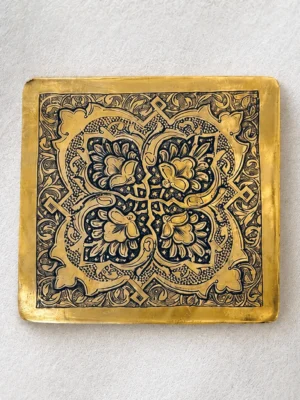
Floral forms, scrolling plant patterns and calligraphy provide another set of references. They may appear as embroidery or print, or influence the cut and arrangement of a garment. A floral reference can become a shaped edge; a woven pattern can suggest a colour relationship.
These traditions have developed through exchange and reinterpretation. Recognising a familiar motif does not, on its own, establish where a garment was made or how old its design is.
What Does Iranian Fashion Look Like Today?
It includes clothes for everyday life, independent studio collections, occasionwear and work by Iranian designers based in different countries. Those practices do not all share the same audience, conditions or aesthetic.
Some designers make Iranian heritage central to their work. Others explore shape, construction or materials with fewer explicit cultural references. Covered dressing is an important part of the picture, alongside other forms of clothing and personal style.
Naghmeh Kiumarsi is a Tehran-based designer whose work also reaches international audiences. Her practice connects Iranian art and craft with contemporary womenswear. That combination makes her a useful example of how a designer can work from a particular cultural background while creating clothes for varied settings. Her career is covered in About Naghmeh Kiumarsi.
In her interview on Iranian culture and fashion design, she discusses the research involved in translating heritage into clothing. The emphasis is on understanding a reference and making decisions about what it can become.
Understanding Iranian Fashion Through the Clothes
The broad definition is a starting point. The detail becomes clearer when we ask specific questions: who made a garment, which community or period informs it, how its fabric was produced, and how it is intended to be worn.
Those questions leave room for both continuity and change. A traditional textile can be used in a new silhouette. Regional clothing can retain its meaning within a community while inspiring a separate design practice. A contemporary Iranian collection can also take a direction with few visible historical references.
Explore Naghmeh Kiumarsi’s collections to see one designer’s approach to these possibilities.