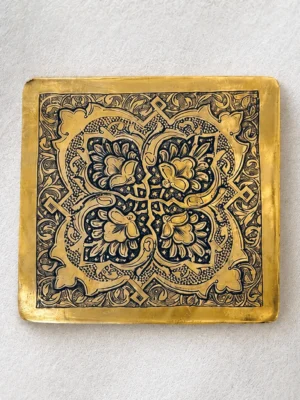
Iranian culture is rich, layered, and deeply rooted in the country’s ancient history and civilization. Its influence can be seen across many disciplines, including art, architecture, music, and craft. Fashion, too, is a powerful medium through which Iranian culture can be introduced to a global audience.
Contemporary Iranian fashion has undergone significant evolution. A new generation of designers draws inspiration from the country’s cultural heritage to create modern garments that preserve Iranian identity while remaining relevant and appealing internationally. Naghmeh Kiumarsi is one of these designers.
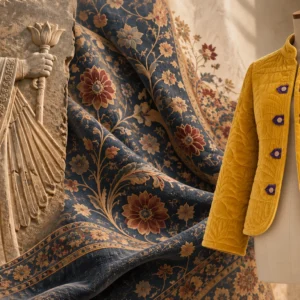
Naghmeh Kiumarsi’s work has been exhibited in countries including Germany and the United Arab Emirates, while her collections have also been presented in galleries and boutiques outside Iran. In 2015, her yellow velvet dress, Eternal Time, was showcased in the Iranian Fashion section of the Edinburgh Iranian Festival. The piece is now held in a museum collection in Scotland.
“Given the rich history and culture of our country, we have much to say through art. My mission is to introduce this cultural richness to the world in every way I can. My style is postmodern; I bring traditional and modern elements together in my work. I want to show that we can move forward alongside contemporary fashion while preserving our own personal style, rooted in our history and culture.”
The Flowers of Shah Abbas’s Garden
With over 21 years of experience in fashion design, both in Iran and internationally, participating in fashion-week-related events had long been among Kiumarsi’s professional goals.
“Although this presentation was different from Milan Fashion Week and considered part of its wider programme, registering and presenting a collection there was still challenging for me. As with my other work, I wanted to present a conceptual collection.”
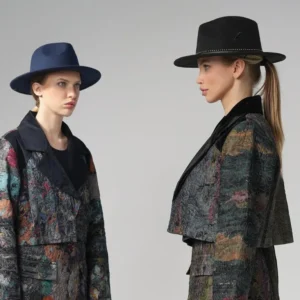
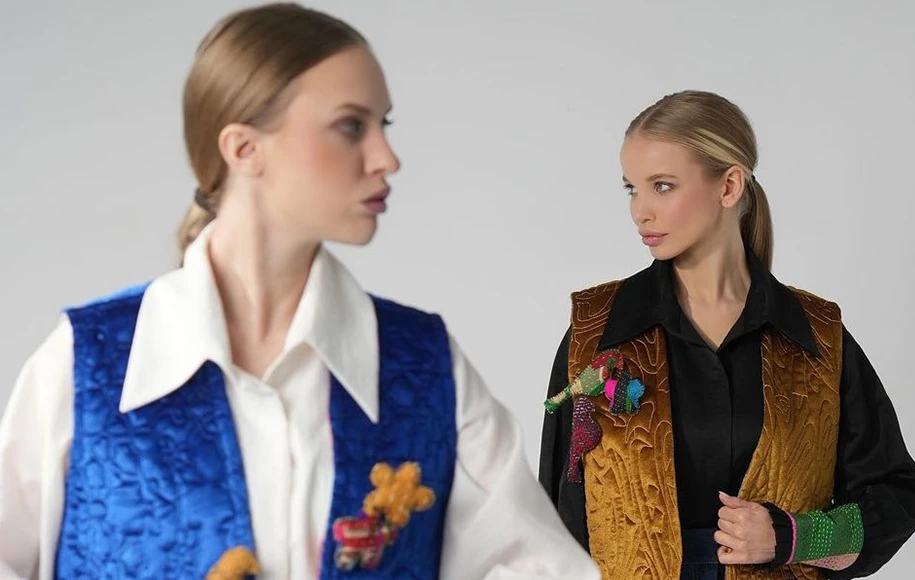
The artistic flourishing of the Safavid era, particularly the period associated with Shah Abbas, became the primary inspiration for this collection. For this reason, Kiumarsi named it The Flowers of Shah Abbas’s Garden. The Shah Abbasi flower, inspired by the lotus, is a symbol of unity and harmony, often seen in Iranian carpet design. In this collection, the cuts and edges of the garments also evoke the form of this flower.
European Responses to Iranian Fashion Design
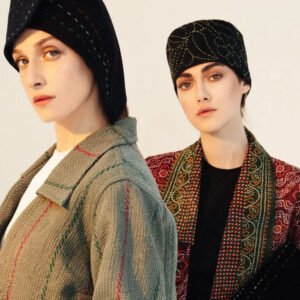
Naghmeh Kiumarsi seeks to introduce Iranian art and craftsmanship to the world. Except for the period affected by the COVID-19 pandemic, she has held shows regularly in Munich, Germany, for around ten years. Kiumarsi believes that, due to limited international exposure, many Europeans have little prior knowledge of Iranian culture. Yet The Flowers of Shah Abbas’s Garden attracted significant attention due to its handwoven fabrics, rich textures, and distinctive colour combinations.
“Many arts, including textile weaving, reached their peak during the Safavid era. In this collection, I tried to introduce different Iranian textile techniques to the audience, including dārāyi and termeh. We even created some of the fabrics ourselves; using carpet fringes, fabric trimmings, and old textiles, we made collages and then added machine stitching. Europeans generally place great value on craftsmanship and handmade work, so The Flowers of Shah Abbas’s Garden received a very positive response.”
Introducing Iranian Culture Through Fashion
For The Flowers of Shah Abbas’s Garden, Kiumarsi carefully collected vintage silk fabrics to give the collection a tangible connection to Safavid heritage. Introducing authentic Iranian culture to the world can take many forms, but due to challenges like insufficient cultural documentation, this process has not always been carried out systematically.
“The only way to ensure the continued presence of Iranian culture is to document what we have, what we have inherited, and what we are capable of creating, and to share it through different media. We need to create more references and resources. This is valuable both for students and emerging fashion designers, as well as for people who want to know Iran more deeply. We need to demonstrate the distinctions between Iranian culture and other cultures through more content, documentation, and sharing.”
The Darbar Event in Istanbul
In 1402 (Iranian calendar), the Darbar event was held in Istanbul, bringing together successful Iranian designers. Naghmeh Kiumarsi was among the participants.
“It was an interesting experience. Perhaps more promotion could have been done to attract a larger international audience. When an event is held outside Iran, it is an opportunity to welcome foreign visitors and introduce Iranian culture more effectively. Similar gatherings take place among designers in Iran as well, but it would be beneficial for these events to have a clearer subject and purpose, so that designers can come together around a shared concept.”
Drawing Inspiration from Culture and Reimagining It
Drawing from Iranian artistic and cultural elements and reinterpreting them in a contemporary form is a major creative challenge.
“Artists need to study more and broaden their perspective. They must understand the story behind each element; for example, they should know when, where, and under what circumstances a symbol has been used. The more we observe and practise, the more meaningful experience we gain. I have always believed that art is the perspiration of the soul; you cannot force it upon someone. As an old Persian saying goes: Words that come from the heart inevitably sit upon the heart. Works of art are a true reflection of this idea.”
Final Thoughts
Naghmeh Kiumarsi believes that artists should express their own vision and worldview through their work, looking beyond existing frameworks. At the same time, they must preserve their individual style and personal signature. Using elements of Iranian culture in fashion design can help international audiences gain a deeper understanding of this rich heritage.