Long before a single thread touches the loom, a daraayi weaver has already decided what the finished cloth will look like. That’s the paradox at the heart of this Iranian textile tradition: the pattern exists before the fabric does. It is tied into the yarn, dyed into place, and only revealed, thread by thread, as the weaving comes together. Few textile traditions demand this much patience, and fewer still have survived it.
What Daraayi Actually Is
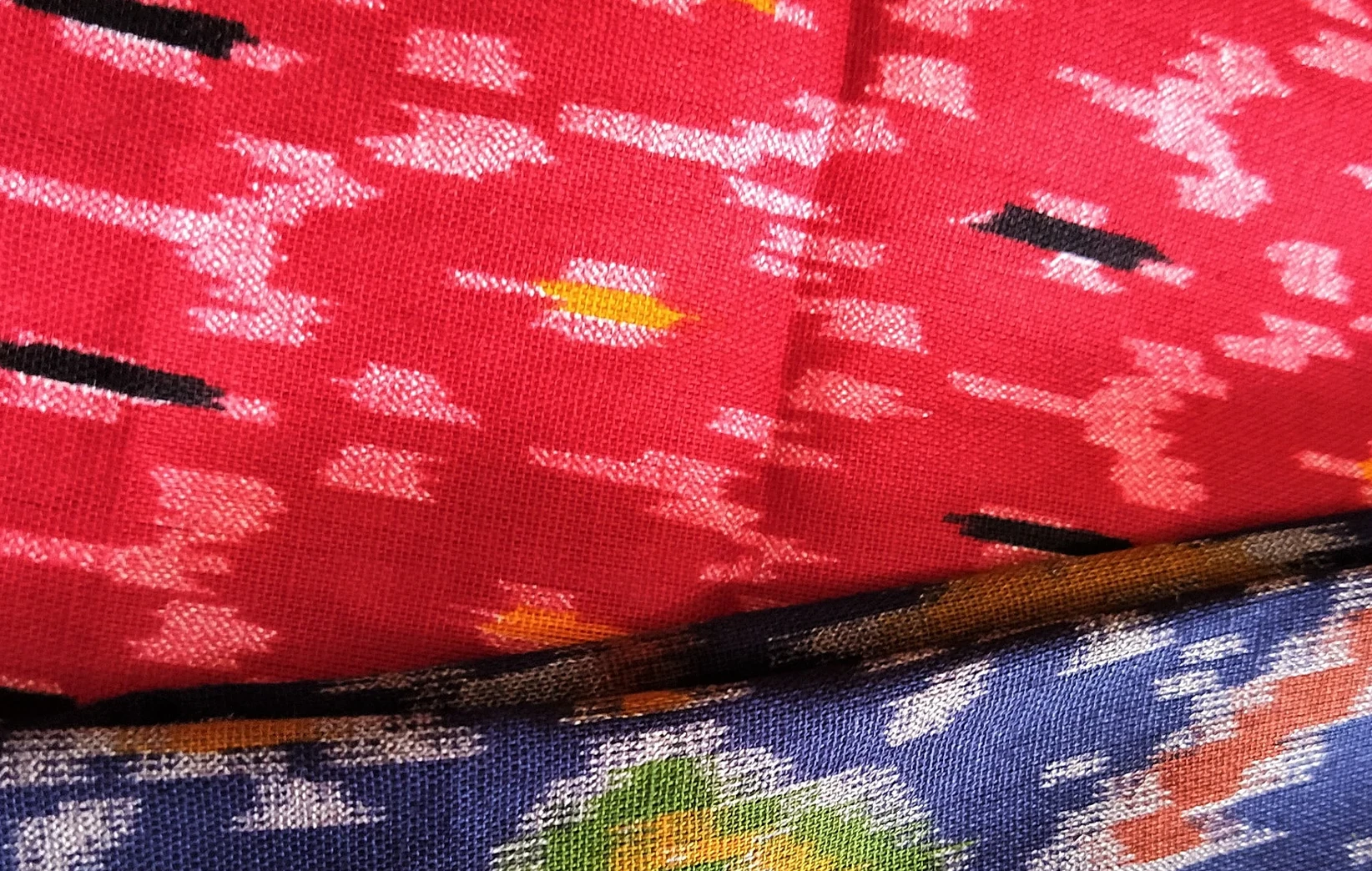
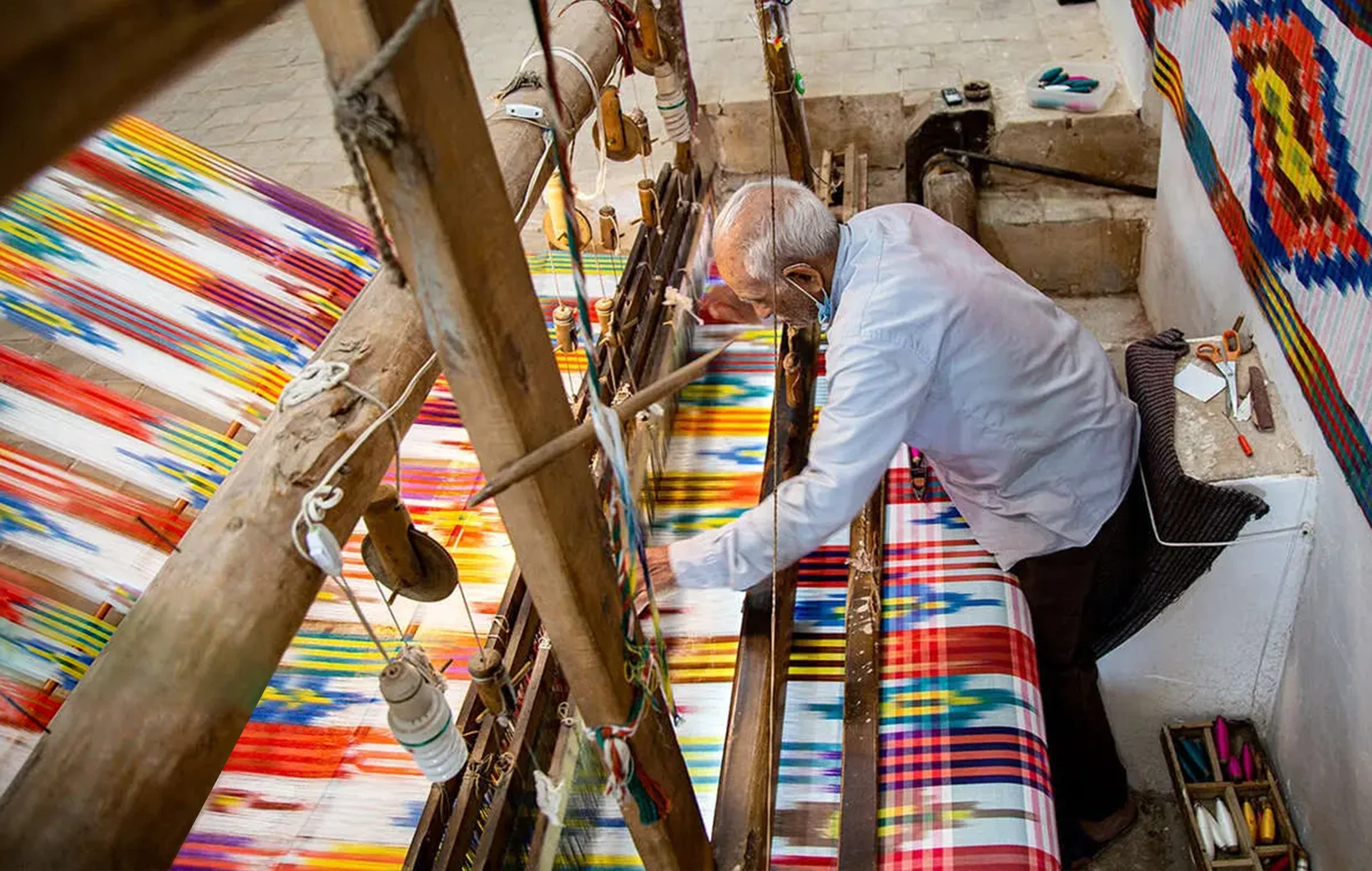
Daraayi is a resist-dyed silk weaving technique practised for centuries in Yazd, a desert city in central Iran long associated with silk production and fine handwork. In global textile terms, daraayi is Iran’s answer to ikat: threads are bound tightly at specific points, dipped in dye, and unbound before weaving, so that the colour only takes where the binding allowed it to. When the dyed threads are finally set on the loom, the pattern that was invisible in the skein emerges as the cloth is woven, appearing to shift and blur at its edges in a way that machine-printed fabric never quite replicates.
The name itself carries its own small history. In Persian, daraayi is closely related to the word for “wealth” or “asset,” and weavers say the fabric earned that name because it was once genuinely a form of one: a length of daraayi silk was a standard part of a bride’s dowry, valued as a tangible asset in its own right, not simply a textile. Only families with real means could commission it, which only reinforced the association between the fabric and prosperity.
The Technique: Patience Before Pattern
There are three recognised methods of daraayi weaving, distinguished by which threads carry the dye before weaving begins. In warp-ikat, only the lengthwise (warp) threads are pre-dyed. In weft-ikat, the cross-threads carry the pattern instead. The most demanding version, double ikat, requires both warp and weft threads to be dyed separately and then aligned with extraordinary precision, so that the two independently patterned sets of thread meet to form a single coherent design, a technique so exacting that only a handful of master weavers in Iran still practise it.
Traditionally, the dyes themselves came entirely from nature: indigo for blue, madder root for red, plant bark or petals for yellow, and various mineral pigments for black. The recurring motifs, most notably a cross-shaped pattern known as chalipa, along with names like tak-khal (“single flower”) and jim-e-meshki (“black jim”), draw on geometric traditions that appear across Iranian decorative art more broadly, from tilework to carpet design, long before they found their way into daraayi cloth specifically.
A Fabric on the Edge of Disappearing
Daraayi is now considered an endangered craft. Industrial printing can replicate a similar visual effect in a fraction of the time and at a fraction of the cost, and the generation of weavers who learned the double-ikat method by hand is not being replaced quickly enough. By some accounts, only a small number of workshops in Yazd still produce authentic hand-tied daraayi today, most of it destined for tablecloths, bedcovers, and other home textiles rather than fashion.
That scarcity is precisely what makes its use in contemporary fashion worth noting. Every metre of authentic daraayi that goes into a garment represents days of manual work that most of the industry has left behind, and a designer who chooses it is making a deliberate statement about where value actually comes from.
Daraayi in the Work of Naghmeh Kiumarsi
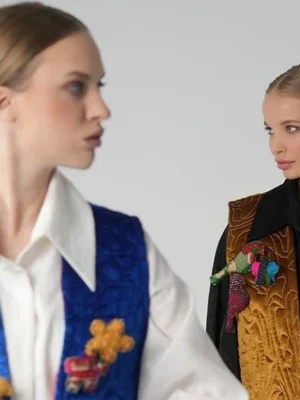
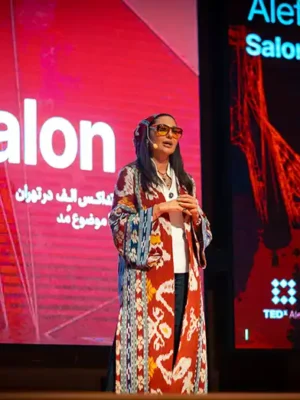
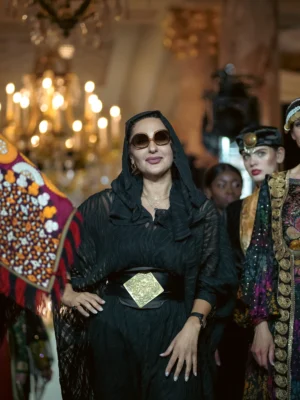
This is the tradition Naghmeh Kiumarsi draws on when she pairs daraayi with raw silk and termeh in her collections, most notably in The Garden of Shah Abbas’s Flowers, the twelve-look collection presented at Milan Fashion Week in 2023. Set alongside the collection’s Safavid-inspired botanical motifs, the soft-edged geometry of daraayi reads almost like a second, quieter pattern language running underneath the floral one, a reminder that Iranian textile art has always worked in more than one register at once.
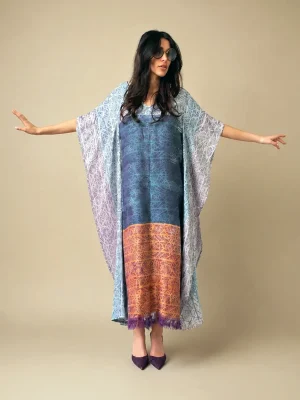
For Kiumarsi, working with daraayi is not a decorative flourish; it’s a way of keeping a genuinely endangered craft in circulation, one collection at a time, rather than letting it exist only in museum archives and dowry chests. It’s slow, it’s exacting, and increasingly, it’s rare, which is exactly why it belongs in a wardrobe rather than only in a glass case.