Originally published in Persian by Honar Online, this interview has been translated into English and republished here for our international readers.
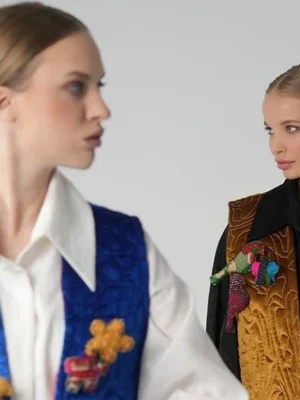
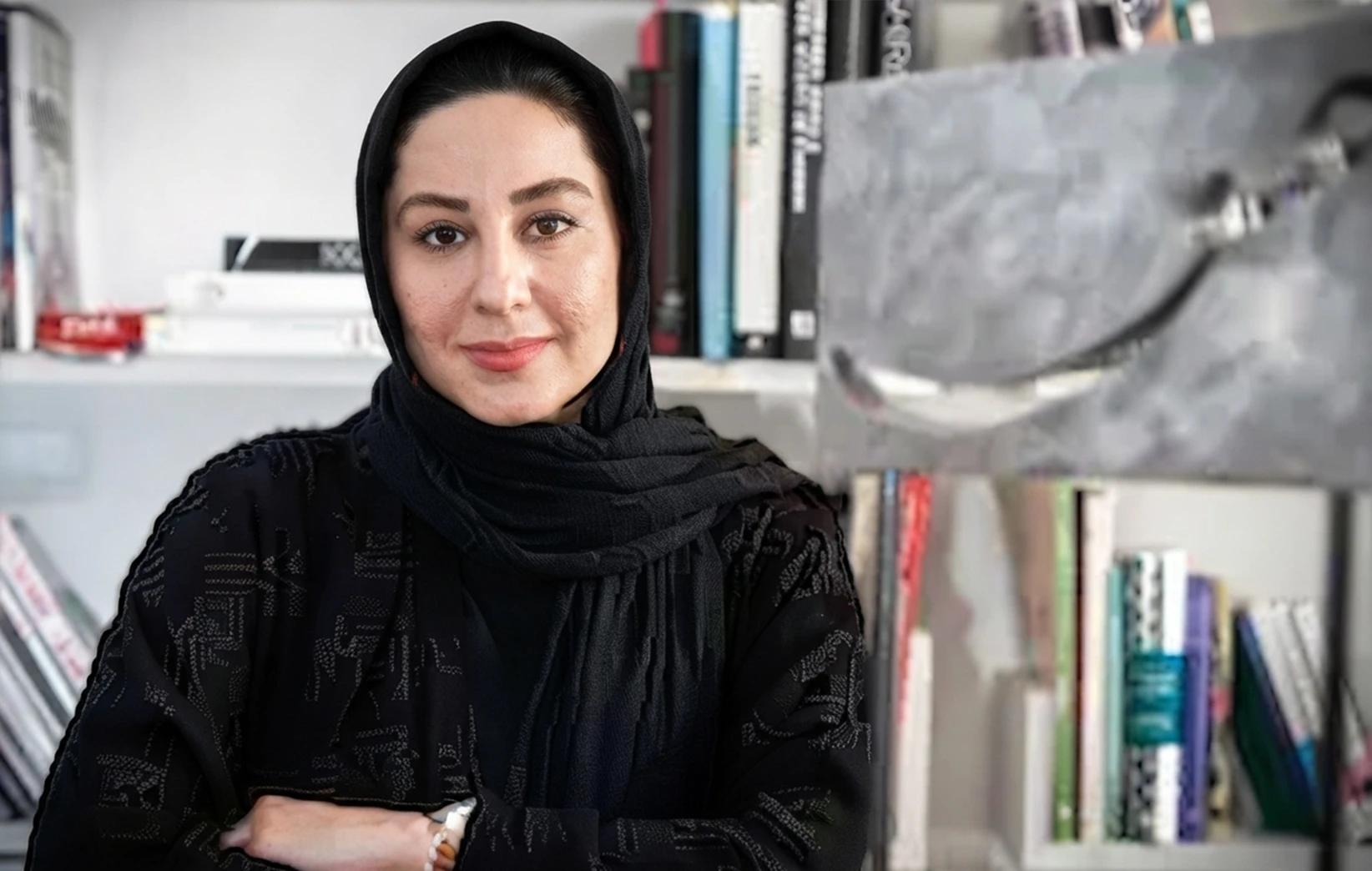
Naghmeh Kiumarsi believes that fashion design is an art form, and in its own way, a kind of illustration.
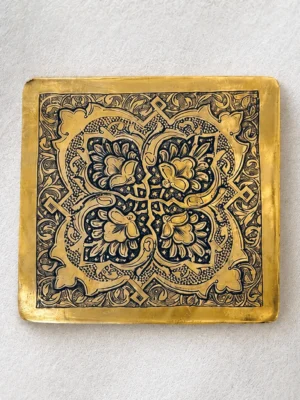
Step through the metal door of an old house, its surface etched with delicate calligraphic linework, and you could easily mistake the space for an art gallery. The hallways are lined with photographs, collages, and sculptures of every size, echoing the familiar atmosphere of an exhibition. But once inside, colourful garments hang the length of the room. This is not a gallery. It is the atelier of Naghmeh Kiumarsi.
What drew you to fashion design?
I’ve loved drawing and designing clothes since I was a child, and I always wanted to design my own. My grandmother and my aunt were with me every step of the way. As I got older, I began designing manteaus for myself that caught other people’s attention. It took years before I finally decided, at a certain point in my life, to turn fashion design into a profession.
Once you chose it as a career, how did you begin?
At first, I took orders directly from customers, but that came with a lot of complications. I realised the better approach was to have finished pieces ready to sell. I still take commissions for certain special designs, but most of my work is manteaus.
Do you draw inspiration from any particular source?
I do look at fashion magazines and journals, since staying current with trends and developments in the industry matters. But if someone simply copies a design outright, that isn’t design anymore. Fashion design is a broad discipline; it’s different from tailoring.
What do you consider when designing a piece? What sets your work apart from others?
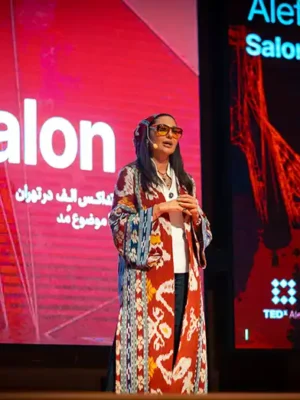
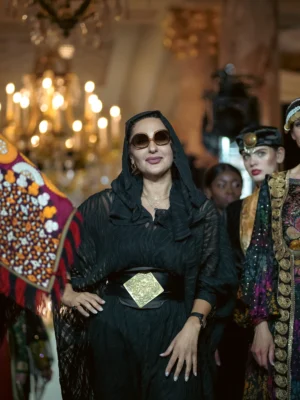
I always start from an idea, and there’s a concept in my mind before I ever begin designing. Every collection I make has a name. For instance, I once presented a collection in Dubai called “Remember to Fly.” Fashion and art are directly connected, and fashion design is, in essence, a form of illustration. I have a concept for a subject, and I illustrate it, though the audience never sees that initial idea. I already know the name of my next collection, but for personal reasons, I often choose not to reveal it.
Even without knowing the collection’s title, can viewers still sense a connection between the pieces?
Yes, that’s essential. That’s the nature of a collection. One basic principle, for example, is to limit yourself to a small number of colours within a collection, or if you use many colours, to make sure the patterns and fabrics remain in harmony. Whether you’re presenting clothing, paintings, or anything else, it helps to use consistent materials or repeat a central subject across every piece, so the collection reads as a coherent whole.
What does the process of designing a garment look like for you?
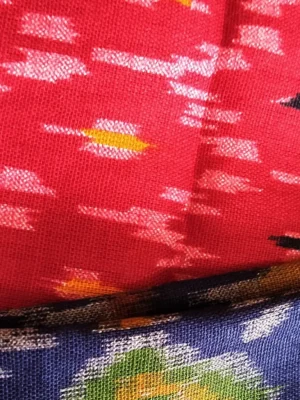
I always prepare the fabrics I want to work with in advance. I keep small swatches of them in front of me, then sketch the design in my notebook and set the corresponding fabric beside it. From there, the design goes into sampling, to test whether it works with those fabrics. A prototype is made from the design, then reviewed for flaws, and decisions are made about production and presentation. Once we’re satisfied there are no issues, the piece goes to my production team, nine people handling sewing and handwork, to be finished and prepared for release.
You’ve also worked internationally. Tell us about how you’ve presented your work abroad.
My first show abroad was in 2007, at a cultural festival in Karlsruhe, Germany. The collection I presented was colourful, full of handwork and embroidery. Because I wanted to showcase our own country’s dress, I designed pieces layered with something like a manteau or coat, and the models wore headbands during the show. This past summer, I presented a collection in Munich called “Blue, Orange, Love,” which turned out very well. Most of my exhibitions abroad have taken place in Dubai, where pieces were shown to select clients and sold. Years ago, I also designed the “Tree of Life” piece for the World Food Programme; I donated it to them, and they used and sold it. There are other opportunities in discussion that haven’t been finalised yet. I’ve also stayed in touch with other designers abroad, sometimes offering help, sometimes receiving it. I’ve received invitations to fashion weeks in various countries, though I haven’t yet had the chance to attend.
Were those collections shown abroad, particularly in Europe, only exhibited, or did they sell as well?
Yes, all of them sold. I designed the pieces with European climates and tastes in mind, so they’d be practical to wear there. People responded well to them and welcomed anything distinctive. The collections included both dresses and manteaus, and interestingly, the manteaus sold even better, since they were something new to that audience, who wore them as coats or overshirts.
Is there something in your designs that signals a piece is Iranian?
Absolutely. There are markers in the design that distinguish Iranian work from anything else. You can use Iranian motifs, though it isn’t always necessary to include an obvious symbol to convey that identity. Sometimes it comes through in a trim, a type of fabric, or even a colour that reveals where a piece belongs. Eastern fabrics have their own distinct character too. There are small details in the work that might not even be noticed, yet they define its identity. Even many international brands today are drawn to Eastern colours and motifs, favouring bold, vibrant designs. But beyond all of that, work that comes from the heart resonates, even if it’s something very simple.
Have you also drawn inspiration from regional or ethnic dress?
Very much so, from Kurdish and Lur clothing among others. That kind of influence was stronger in my earlier years. My early work was quite traditional, then my taste gradually shifted and the nature of my work changed with it. You can blend traditional and contemporary designs to create something new. That’s really what taking inspiration means; there’s no need to reproduce a regional garment exactly as it is.
Who is your audience, and what draws them to your work?
Naturally, the women who prefer to buy designed pieces are people who want to wear something distinctive. This isn’t limited to clothing either; it extends to jewellery, bags, shoes, and more. Some people would rather buy a designer’s work than a generic piece from a particular brand, because they don’t want to look like everyone else. Some of our pieces are extremely limited; a certain fabric might yield only two or three garments. Our clients range from eighteen-year-old girls to eighty-year-old women, depending on how they dress. What surprises me is seeing the same piece bought by both a twenty-year-old and a sixty-year-old; age simply doesn’t define the garment. That said, some pieces are designed specifically for a particular age range.
Have you dealt with your designs being copied?
Very often. It happens a lot, and copiers rarely consider that someone put real thought and time into arriving at that idea. It’s a kind of intellectual investment that each person makes in their own work, yet many people dismiss that easily. What keeps me going, though, is that the people who buy from me genuinely value my work, and that matters a great deal. There are also people who assume nothing significant went into a simple-looking garment, but the real question is who thought of it first and who carried it out. There has to be a way to distinguish the original from the imitation and to recognise the value of each. In truth, the highest compliment a piece can receive is being imitated, though it would be nice if that imitation were done properly.
What’s the largest run you produce of any single piece?
It depends. We have a lot of variety in our models, and new pieces are produced every season. Generally, we don’t make more than ten of any single design, though a particular fabric might reappear across different models. Some pieces are made in only one or two units. There’s always variety in my work, because I believe repeating a design kills creativity and turns it into mass manufacturing.
Have you ever considered working with a manufacturer for mass production?
No. If I ever did, I’d want it to remain under my own brand name, since there are specific standards I hold to that would need to be respected if my work entered stores. Unfortunately, attitudes in that space aren’t encouraging; when people do propose partnerships, they tend to put their own interests first. Most manufacturers’ approach is to take a few designs, produce them under my name, and once they’ve learned my methods, simply copy them.
Given how much fashion design in Iran has changed compared to previous years, where do you see its future heading?
If things continue in a direction where anyone with a few metres of fabric considers themselves a designer, that’s genuinely concerning. Though that’s true of most fields; many people start out, but most eventually step aside because they don’t have the stamina for it. Still, from what I see, we have excellent young talent, especially among students in art and fashion design. If they find their own voice and stay committed to this path, they have a very bright future ahead, particularly if they don’t limit themselves to manteaus, since we’re quite weak in dress design and have few designers who specialise in it. Everyone has gravitated toward manteaus, when dress design still has so much room to grow, both in variety and because reduced imports mean strong demand for domestic work right now. Many people would rather buy from a designer than choose something ready-made. The field needs to be organised by specialty: bags, glasses, shoes, each its own focus. People shouldn’t try to do everything at once; concentrating on one thing leads to greater success. With that mindset, there’s real potential for success ahead. In closing, I wish success to everyone working in this field, whether tailor or designer. I hope they find the right path and do justice to their craft. My only advice to young people is this: be yourselves, and have the courage to be yourself, so you can create honest work that reflects your own sense of things.
Translated from the original Persian interview, published by Honar Online, and reported by Maryam Darvish.